How the workshop came to be
During the summer of 2025 we had the opportunity to test some of our initial ideas about clay-based visioning through a collaboration with Inter Alia, an Athens-based NGO whose scope is centered around youth work, non-formal education and advocacy. The idea for the workshop was formed during the Future Narratives festival in Ferrara, in which Giorgos attended in May of 2025 as a participant from Inter Alia’s group. This festival was a part of a larger Erasmus+ project about inspiring young people throughout Europe to imagine inclusive futures by combining futures literacy with storytelling. For the project’s final workshop in Athens, we collaborated with Inter Alia in organizing and hosting a hands-on visioning workshop, in which we would experiment with the clay-based processes that we had drafted in our funding proposal. This culminated in “Shaping the Future with Clay”, marking the (informal) beginning of Ceramic Futures, which took place on July 10th of 2025.
The workshop explored art-making as the intersection of futures literacy and storytelling, by engaging participants with imagining, debating and documenting distant spatial futures using clay as a tactile research medium. Drawing from the visioning techniques encountered at the Future Narratives festival, like scenario-building, back-casting and transition-thinking, combined with hands-on creative activities. Our aims were to encourage interdisciplinary collaboration among (spatial) thinkers, support reflection on societal values and structural change, and equip participants with creative tools in translating abstract visions into material artefacts. The program consisted of seven visioning activities organized into three phases: individual visioning, collaborative foresight and the formation of a collective imaginary. This structure allowed us to transform our previously loose ideas into a more coherent process, in which the output of one activity was used as input for the next.
The workshop was hosted in Inter Alia’s community space in Exarcheia and drew twenty-five participants, exceeding the open call’s intended fifteen to twenty. Although the call targeted young people (18-30), we also aimed to reach an audience of spatial thinkers whose insight would be valuable for our own project — architects, urban planners, researchers, artists, educators and related students practitioners. In the end, the group consisted mainly of youth workers affiliated with Inter Alia, a handful of architects from our personal network, and several individuals who found out about the workshop through social media. Material requirements were deliberately modest: paper, pens, scissors, glue for collaborative visioning tasks and brainstorming, as well as both air-dry and terracotta clay for the hands-on exercises. The workshop lasted four hours, from five-thirty to nine-thirty, with short breaks between activities.
Activity 1
Introduction
We began with a brief overview of the workshop’s aims, an introduction to Inter Alia’s work and a short presentation of the facilitator and Ceramic Futures. Participants then introduced themselves in a circle by sharing something about their past, present and future. Although the responses remained fairly surface-level, as was expected, this initial exercise created a comfortable entry point for the group in temporal thinking.
Activity 2
Burying a secret in clay idol
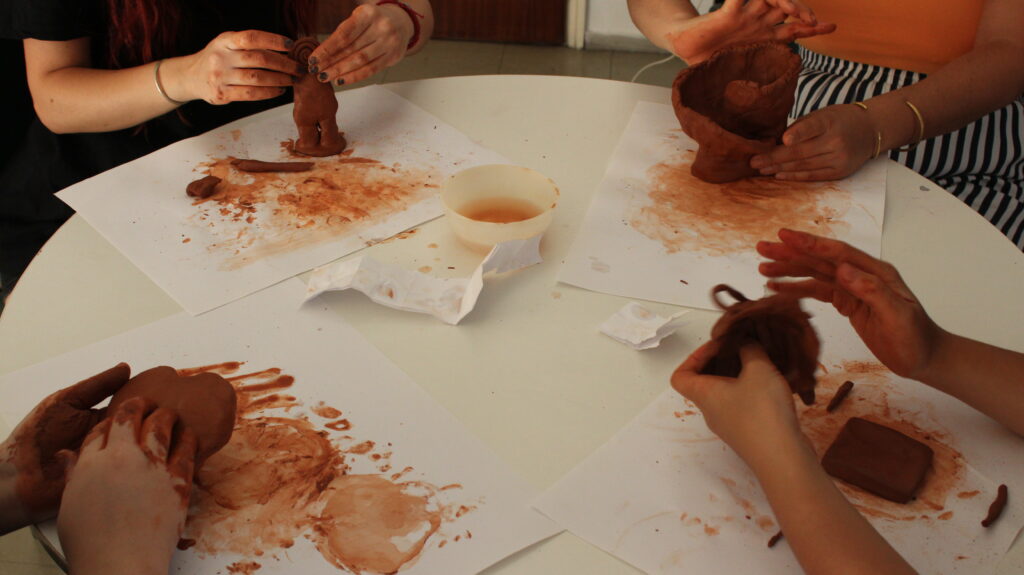
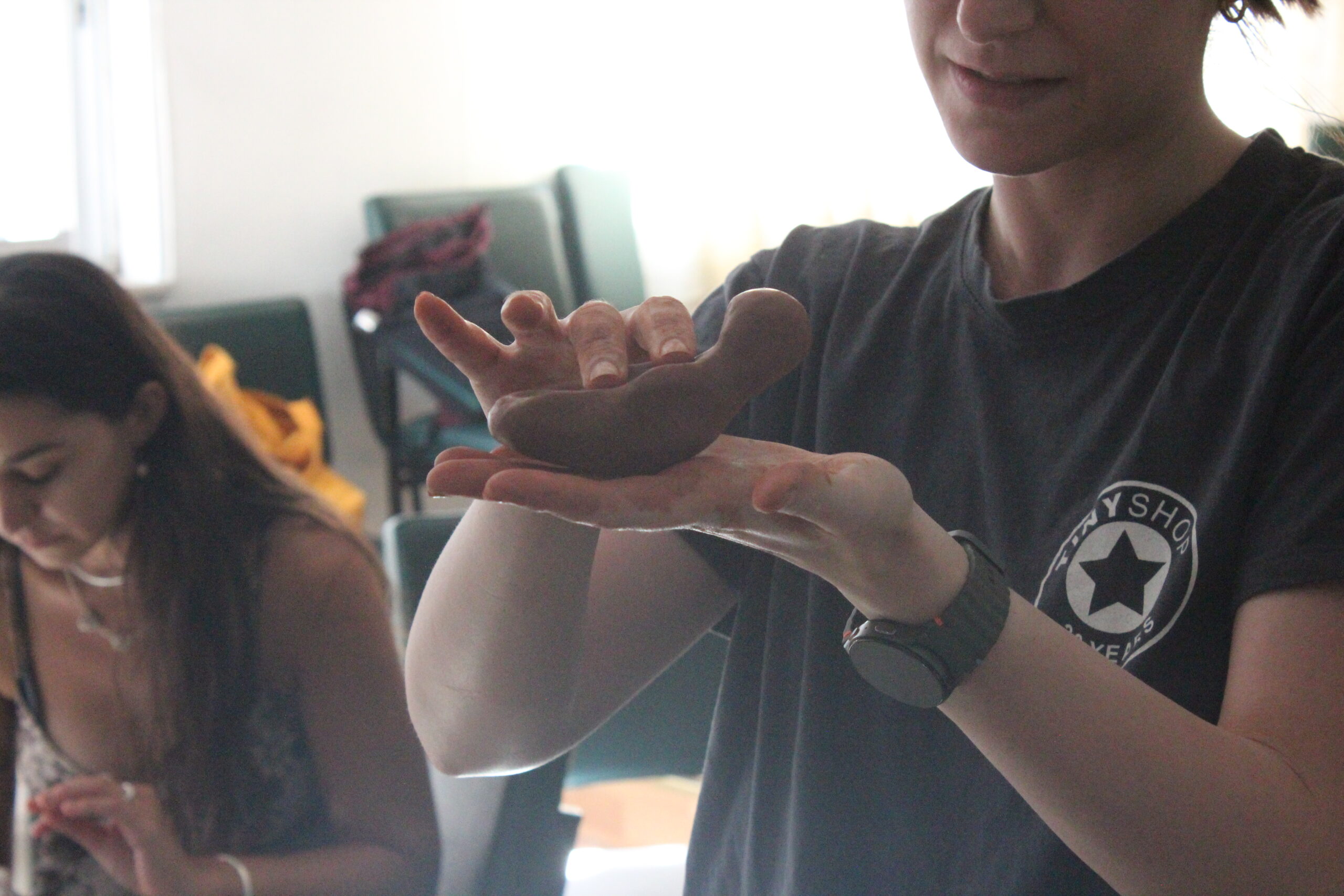
The first hands-on exercise introduced clay as a medium for personal, short-term visioning and material manifestation. Participants were instructed to contemplate their personal futures, and document their thoughts on a small piece of paper. This may be a sketch, a description, diary entry, poem, or wish. As this was set within their own lifetime, the visioning activity relates to short-term futures. After they finished, they were instructed to grab a piece of terracotta clay from a prepared slab that lay on a table in the middle of the room. Then, they had to fold up their paper, bury it within the clay and sculpt something that relates to their wish. After they would be finished with their idol, they could share their work and give hints about how the form relates to their secret, without revealing it.
While the participants were skeptical at first, once someone tore a piece of clay, everyone started getting their hands dirty. This activity was only intended to be a quick experiment with clay-making, and no specific instructions were given or examples of the possible outcomes. However the participants grabbed pieces of paper, laid them on the tables, and started working very diligently towards a form, deeply engaged with hands-on experimentation.
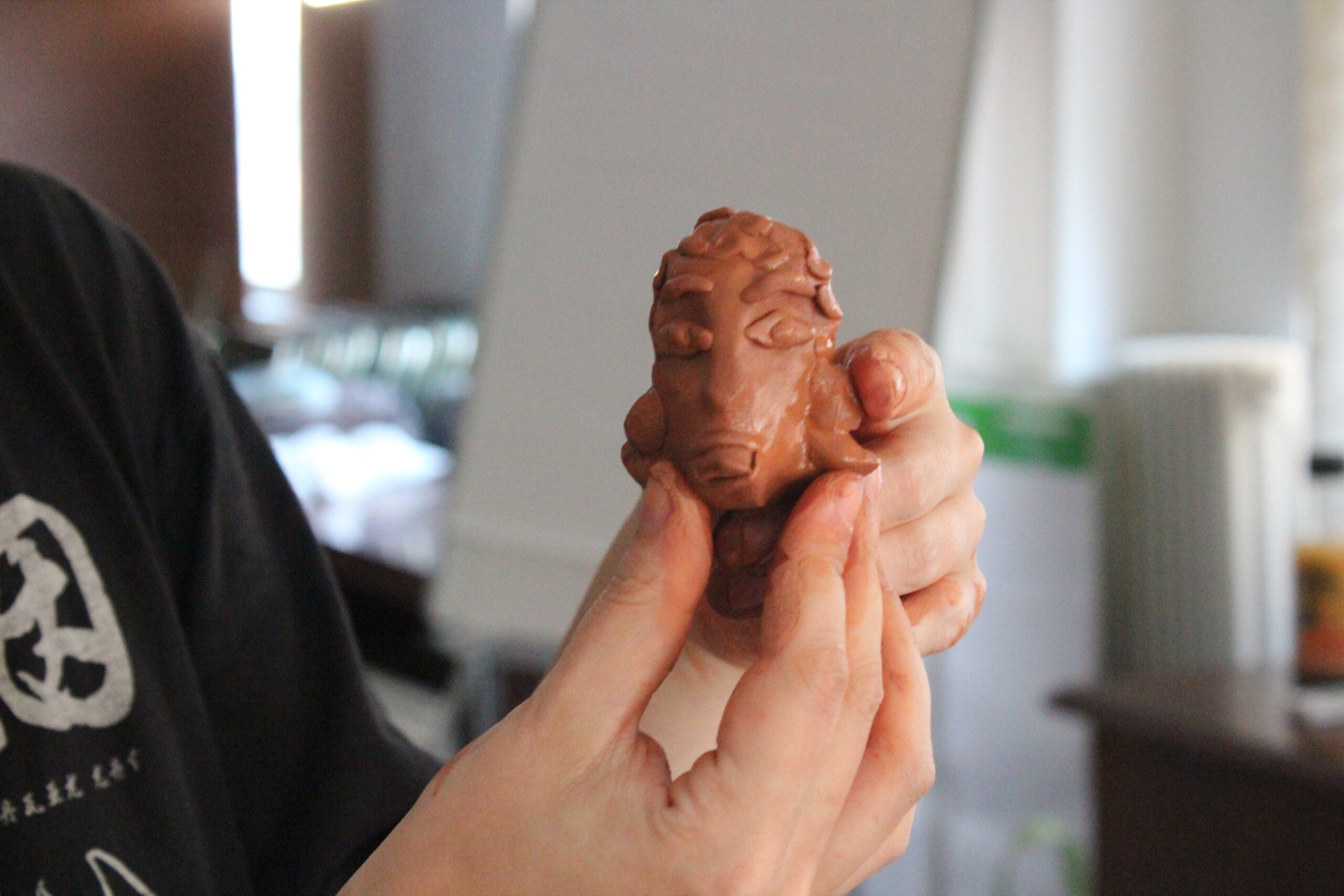
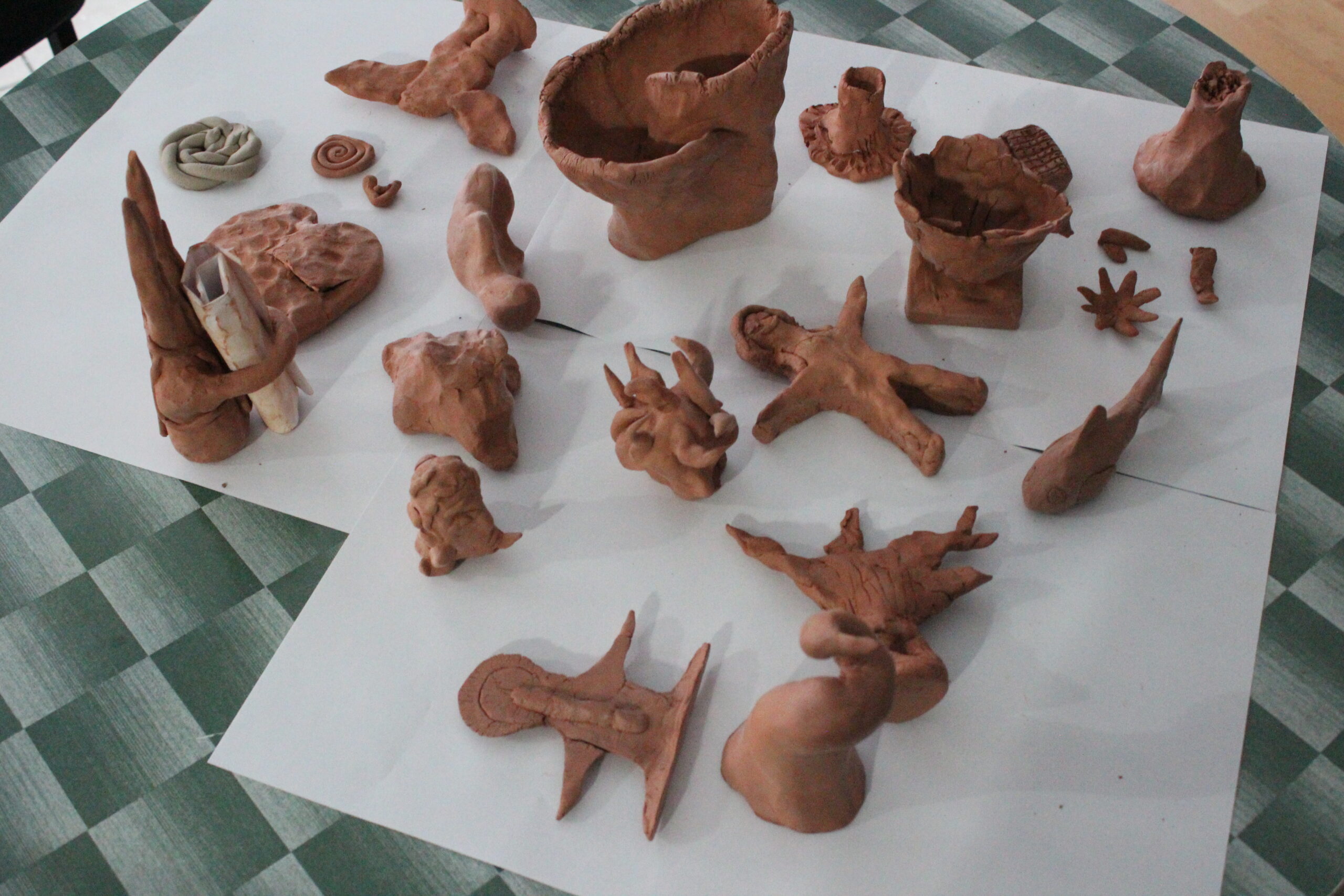
In the end, few participants shared what was their reasoning behind their chosen form. Two are highlighted here. A participant sculpted an idol of their own head and face, as their secret was deeply personal and serious about them, however they included the tongue sticking out in a funny way, so as to make sure to not take the future so seriously. Another participant made an abstract, sculptural form that once placed on their hand could not be balanced. They mentioned that even though they see their future as uncertain, they want to maintain a sense of flexibility, to not look for a particular balance yet. Even without having previous engagement with clay, participants managed to embed deep, personal messages within their forms, resulting in a collection of unique idols.
Participants gently placed their idols in small plastic bags to allow for a slow drying process, preventing the intricately-shaped idols to not crack. We initially intended to bisque-fire and later glaze the pieces, so that the embedded paper would burn away, however due to time and budget constraints this was not possible. Nonetheless, some participants later returned to retrieve their pieces as workshop mementos from Inter Alia’s community space.
This activity took longer than anticipated; lasting around thirty minutes instead of fifteen, which suggests that future versions should allow for more time for creating as well as sharing ideas and reflection. Also, using air-dry clay would enable participants to take the dry piece home the same day at the end of the workshop, though the paper within the idol would remain intact (perhaps this could also be considered as part of the exercise, to revisit the secret if the idol is broken). Overall, the exercise touched on themes of manifestation and magical thinking, which we hope to explore further by revisiting ancient clay rituals in the context of contemporary digital cultures of manifestation, and explore their spatial qualities and connections.
Activity 3
Collaborative Brainstorming
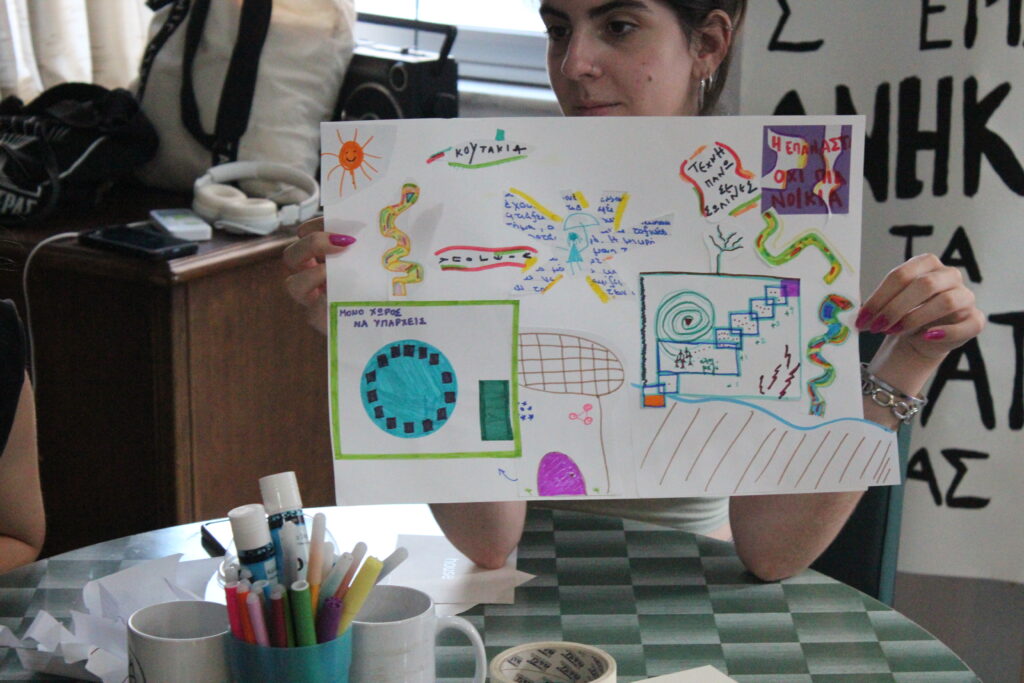
Moving from individual reflection to collaborative envisioning of the distant future, participants chose one or more thematic cards from a provided layout. These topics were house, food, energy, infrastructure, body, water, nature, leisure, governance, art, work, travel, climate, democracy and technology. By forming small groups of two to three people, participants documented their thoughts through sketching, writing, collaging or sculpting, and in the end took turns to present their ideas, and placed them on the floor so that the entire group may consult them during the following activities.
While the exercise successfully initiated conversation and creative imagination about the future, the overall ideas remained relatively surface-level. Also, many participants explored dystopic future scenarios, which somewhat hindered creativity and fueled doom-thinking. At the same time, some struggled to visualize or depict these distant futures, which might reveal that the prompt was too abstract for a group with mixed skill-levels. This format may work better with participants that are accustomed to visualization or creative practice, in order to create a strong basis of ideas that can structure the following activities.


Activity 4
Ostracism
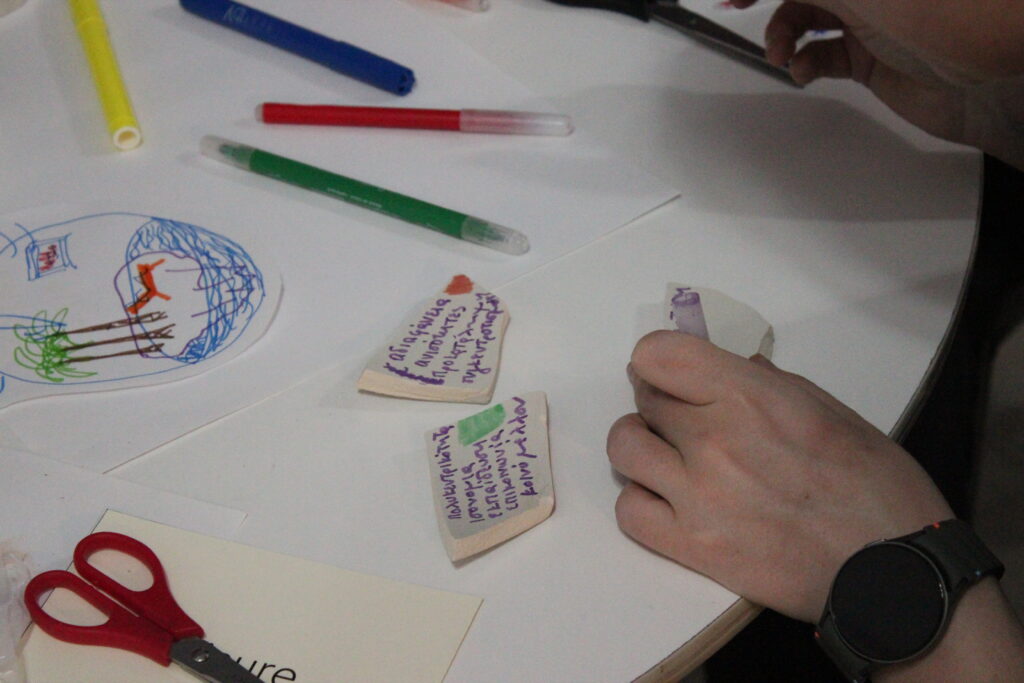
Inspired by the ancient Athenian practice of ostracism, participants reflected on societal transformation by inscribing two pottery shards. On one they were instructed to name something they would remove from the present in order to reach their desired future, and on the other something they would add. To tell them apart, participants noted a minus symbol (-) on the removal and a plus (+) on the addition. After a long reflection process, participants gathered their “votes” on one table while some briefly presented their thoughts. With everyone around the inscribed shards, participants were instructed to locate connections between these values and concepts, by physically connecting them with soft clay. The resulting mosaics visualized different pathways towards transition, capturing the layered discussions in a physical form. For example, a shard inscribed with racism was linked with fear, respect and freedom, while rules and borders were added next, going beyond a two-dimensional layout.
Although discussion time was limited, and the gathering around a small circular table disallowed for everyone to be present, the exercise was widely described as cathartic, offering participants a sense of agency in naming structural conditions that support or hinder future changes and manifest a positive future through physical, material actions. For future iterations, breaking into smaller groups might better support dialogue, as well as using firmer connecting clay would result in more stable assemblages. Also, this activity could be paired with a writing exercise to document the participants’ thoughts on the chosen key-words. If more time is allowed, participants could also be instructed to locate “missing links” between assemblages in order to create a more firm idea about a future transition.


Activities 5-6
Visualizing Τransitions
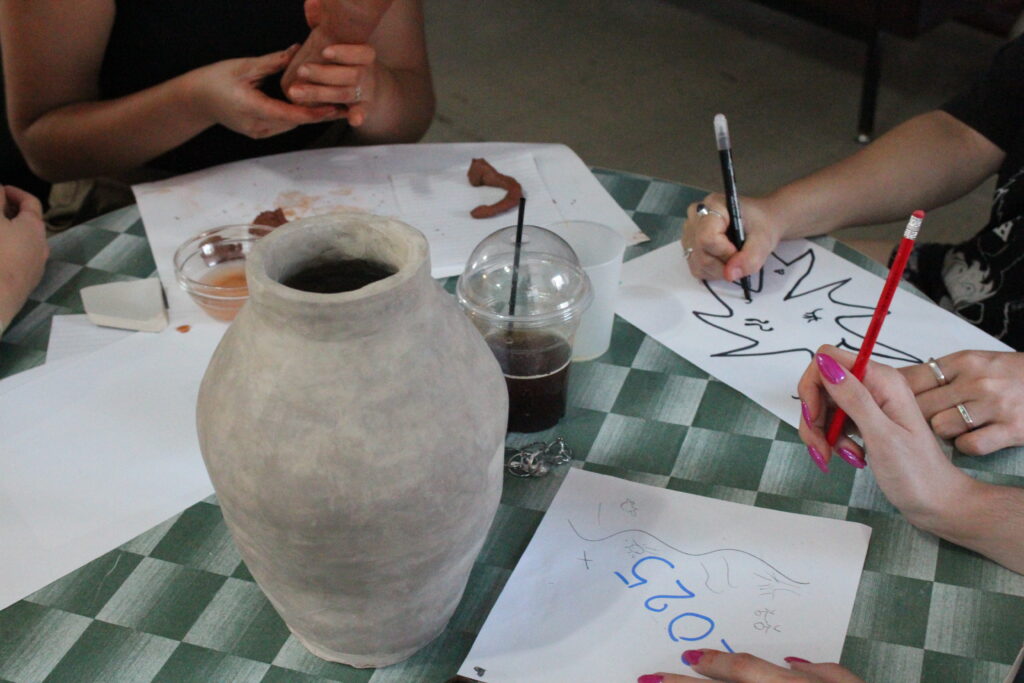
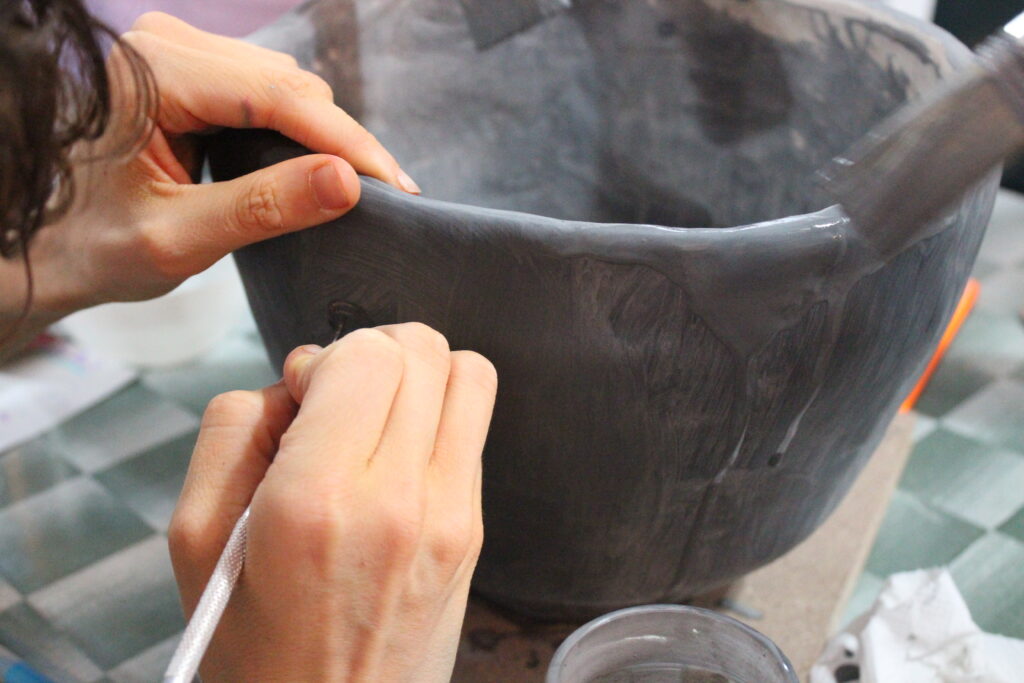
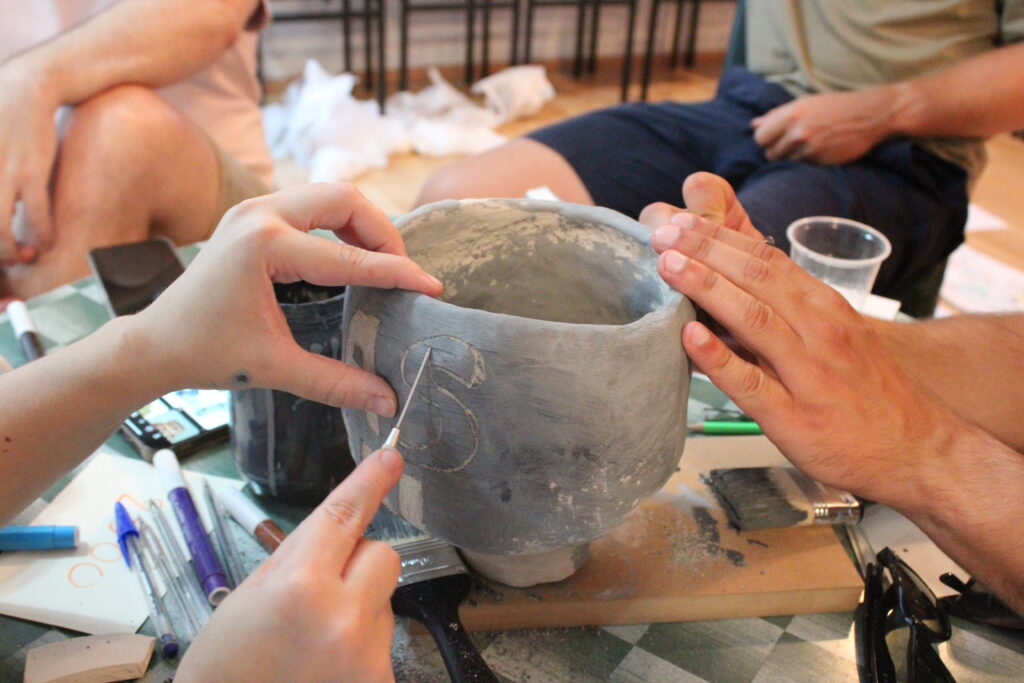
For the final creative activity participants had to engage with transition-thinking, tracing pathways between present and distant future and visualizing them on clay. Four groups were formed, each representing a different moment in time: 2025 (present), 2080, 2125 and 2300. They were presented with four pre-made ceramic vessels of different shapes and sizes, which were prepared the week before and had time to reach bone-dry state. After the groups decided which vessel to work on, their task was to brainstorm, discuss and reflect on how they would represent their moment in time on top of the clay vessel. The work conducted during the previous activities was utilized as input for this one, allowing participants to discuss ideas in a timeline, reflect on temporality and what symbols, scenes, patterns or key-words would best describe them. We also had prepared a small presentation with references of narrative pottery, in order to support participants that had limited skills with sketching. After each group was finished with their brainstorming and sketching session, they grabbed brushes and the prepared black pigment and started covering the vessels. The black pigment turns medium gray once applied to the clay surface — only once fired it would become dark again. Then, participants carved their pieces simultaneously, engaging in a collaborative process of visualizing futures.
While this activity produced vastly different pieces, showcasing various carving techniques and thematic approaches, participants didn’t have enough time or energy to finish their work. Such a demanding activity proved too ambitious for the length of the workshop. Future iterations should consider this limitation — this activity alone could even be explored in a workshop by itself. Also, in practice, participants tended to stay in the same groups throughout the activity, even though they were encouraged to work more fluidly within groups, limiting cross-group collaboration. This also perhaps disallowed new ideas to emerge through creative thinking.
Activity 7
Reflection Ritual
The final activity that was planned was to invite participants in a hands-on reflection through another round of ostracism, asking them to think about policy or personal changes. However, again due to time constraints and participant fatigue, we were unable to conduct this exercise fully. A brief discussion took place while cleaning the space, allowing for some immediate feedback.
Reflection
Ceramic Futures is both an experiment and an open-ended question about what clay can do for spatial thinking, so oftentimes we have found it difficult to explain its aim or methodology to others. However, the positive response from this workshop was reassuring, urging us to keep going. It revealed several insights that can inform future iterations, but also provided critical input for our project.
First, while the framework of moving from individual, to collaborative, to collective activities eased people into futures-thinking, the amount and scope of the exercises proved too large for a single workshop. Working with clay requires time and patience, not only due to its inherent slowness but also because intervening on a vessel requires intention, symbolism and contemplation. Splitting the activities across more than one workshop would allow adequate time for the participants to reflect, but also to create. Second, working simultaneously as a collective with clay proved challenging. The intention was that the entire group of participants would function as a collective of artists that were commissioned to create a series of ceramic pieces. This was inspired by the way we worked for the ceramic vessel of Another Rural, however upscaling in a workshop of people that were engaging with clay and structured futures-thinking for the first time did not work as we had imagined. Collective-decision making would require a lot more time and perhaps multiple tactile tests, but also more hosts to provide guidance. However, this exercise also illuminated that the structural adequacy or completeness of the clay object may not be as important as the educational content for exercises like this, in which the end result may be recycled and not fired and glazed. Third, because many participants were already acquainted through Inter Alia, pre-existing group structures persisted throughout the sessions, limiting cross-pollination of ideas. Future workshops may benefit from intentionally mixing participants and designing spatial arrangements that encourage movement.
Overall, layering futures literacy methods with tactile artistic processes proved to be highly effective with groups of mix-experience, but adequate time allocation is required to allow participants to engage with reflection, discussion and (co)creation.
For a shorter workshop review you can see pages 142-143 of the Future Narratives Curriculum for Youth Work.