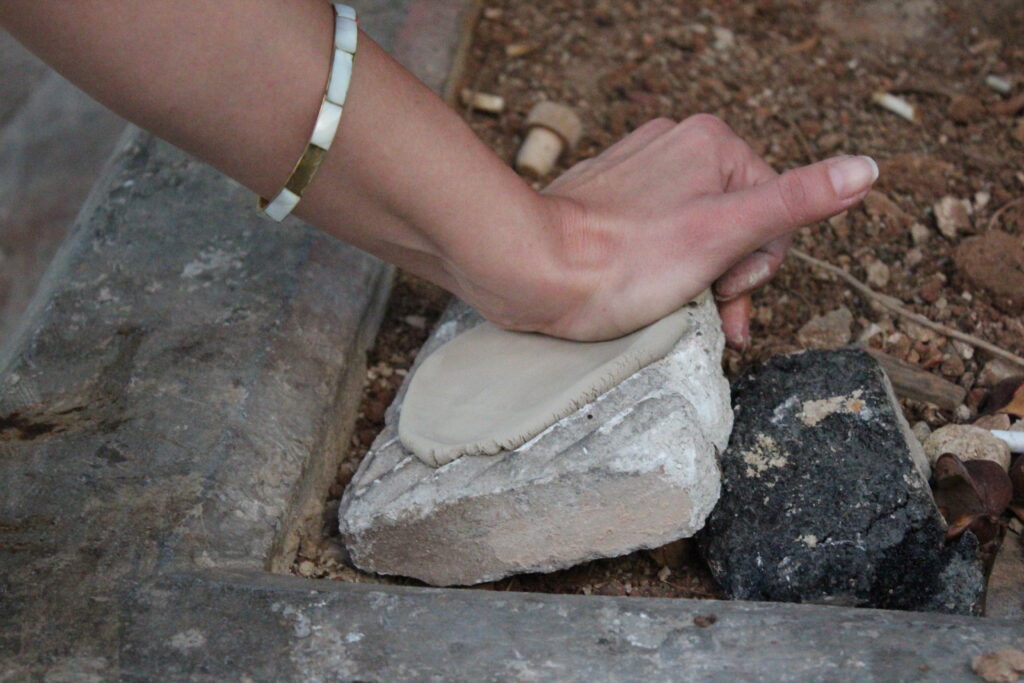
Shaping Athens with clay was the second experiment-workshop we organized with Athens-based NGO Inter Alia in the beginning of September, hosting the students of College Year in Athens (CYA). This group of young people, coming from various American universities and study-backgrounds, arrived in Greece to study for a semester, and this workshop would function as their introduction to the city of Athens. Previous iterations of this workshop hosted by Inter Alia included making zines in their community space in Exarcheia, however our intention was to take them outside and allow them to explore the neighborhood themselves. A total of twenty people attended, the majority of them were the students from CYA, with a few people learning about the workshop through Inter Alia’s social media. Among the latter were design students, architects, artists and youth workers, from multiple countries.
Our research aim was to experiment with clay documentation methods by making reliefs of found textures in public space – something that we had previously experimented with a few years ago for Georgia’s thesis research. As an exercise in gleaning, we explored the streets of Neapoli, Athens for textures; looking for rocks, rubble, building material, and documented them on a clay slab. A similar process has been popularized through the TikTok trend of texture hunting, in which people document textures, shapes and patterns found in their travel destinations by using make-shift stamps with kneaded erasers, inking and pressing them on paper. This act combines journaling with urban exploration, allowing travelers to capture their memories through material association. Inspired by these two examples of tactile exploration, we wanted to organize a workshop that would allow the participants to engage with publicness in fun, tactile ways, but through a critical lens.
The concept we introduced was exploring Exarcheia through a set of Athenian Contradictions. We came up with four of these contradictions or dipoles that characterize contemporary Athens: chaos-control, hope-despair, hard-soft & was-is. These concepts hint towards socio-political tensions and history, but were purposely vague, in order to allow participants to interpret them in their own way. The text from our social media post read as such:
“Athens is a city full of contradictions. It is textural and chaotic, peaceful and easy, hard and tense, beautiful and ugly. With clay as our medium, we will venture into Exarcheia and explore these contradictions through gleaning — we will collect textures, reliefs, materials, forms and words. Through this, we will attempt to make the immaterial into material, to explore with our hands things that are hard to explain with words.”
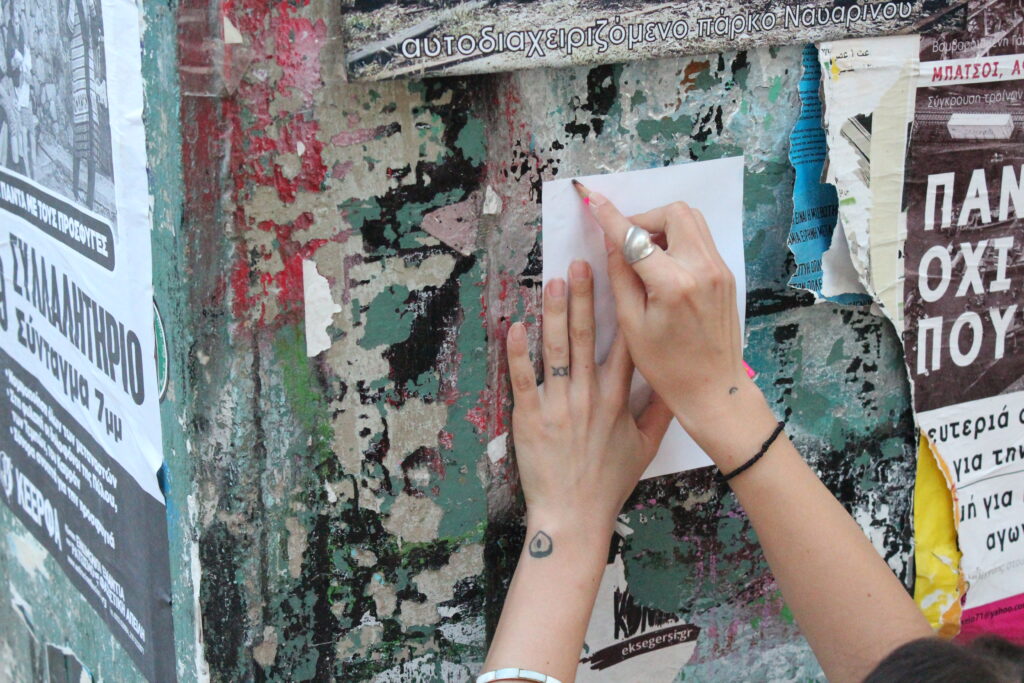
After we introduced ourselves and these concepts to the participants, they were instructed to choose one contradiction and explore its physical manifestations in the public space of Exarcheia. This was done through three documentation methods: collecting reliefs through clay, collecting textures through paper and pencil, and collecting found objects through gleaning. The exploration would last about forty-five minutes, and then we would all meet back at the community space to discuss our findings and engage with a “making” activity. As a preparatory step, the participants had to form little clay balls from the large slab that was provided, getting acquainted both with the material itself and with each other, discussing informally about their intentions and which topic to choose. Small plastic bags were provided, so that they could store their clay balls and later their findings. The participants ventured into the city, either alone or in small groups, reflecting on the topics and experimented with the documentation methods.
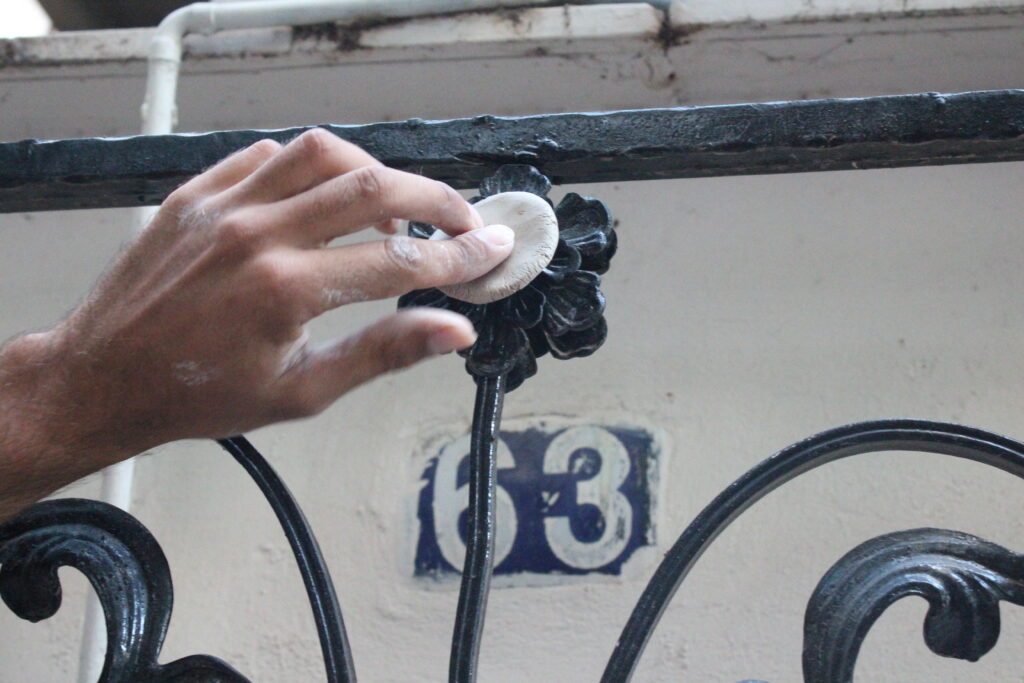
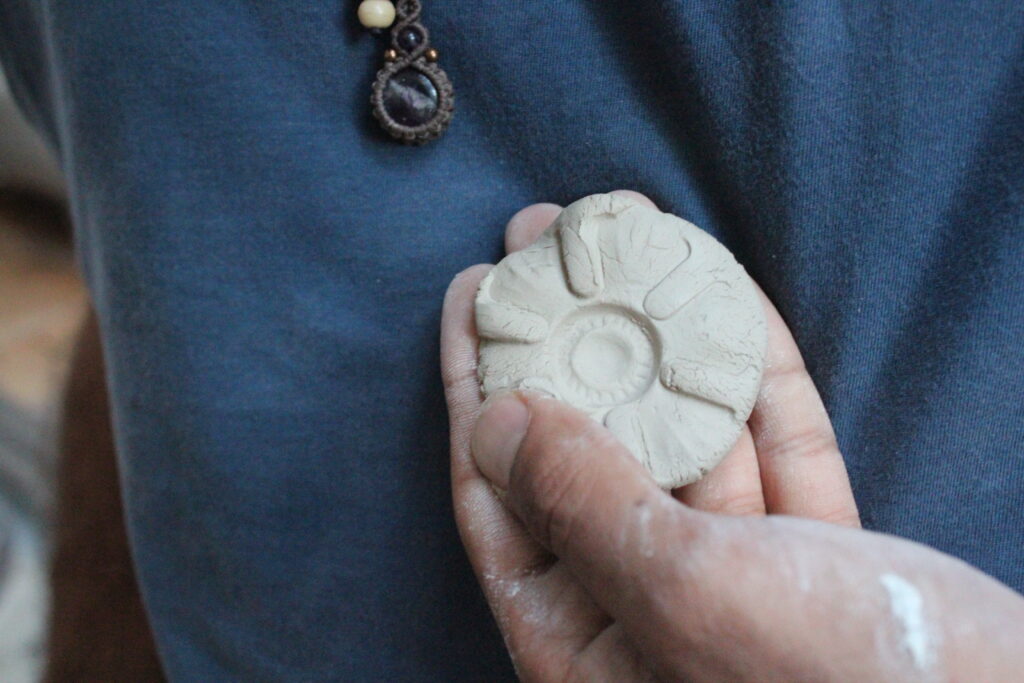
The following insights come from the facilitator (Giorgos) following a group of non-student participants, including a visual artist, an art curator and an architect. This group was already acquainted with Athens and had engaged extensively with creative acts before. While walking and photographing their documentation acts, the facilitator checked-in with other participants as well. Initially people seemed skeptical and hesitant to start documenting, however when one person started, others followed immediately too. Still on Valtetsiou street, near the community space,, participants were drawn to intricate patterns of old steel balustrades, wall textures of the Athenian artificiel (a textural finish of plaster typical in many twentieth-century buildings in Athens), or the various pedestrian walkway pavers. These first clay-reliefs were not exclusively correlated with their chosen contradiction, however the re-usability of clay allowed a sense of freedom; experimentation and intuition became part of the process. The material exploration of the artist among the participants was particularly exciting. They experimented with capturing movement, stepping on the clay and documenting both the pavement and their shoe’s sole, allowing a car to run over the clay ball or dropping it in on an inclined paved street. Later, they also engaged with ephemeral interventions in public space, creating small sculptures intuitively in places that sparked interest. Only the art curator among the group engaged with paper reliefs, while none were interested in locating objects to collect. Overall, clay seemed to be the more exciting and fun documentation tool, hence the most favorable one.

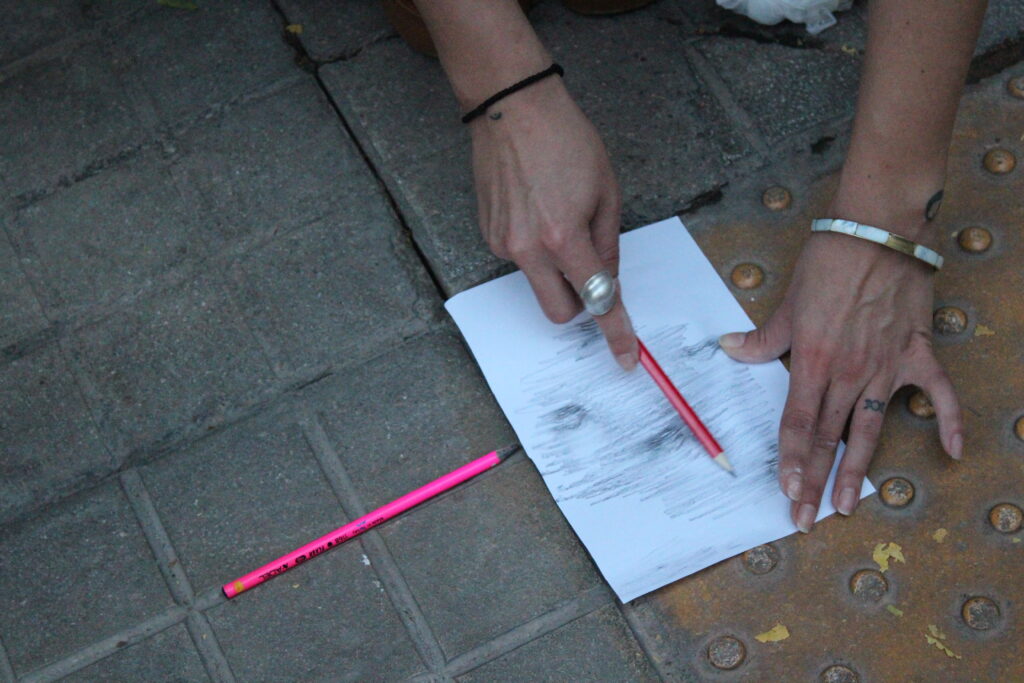

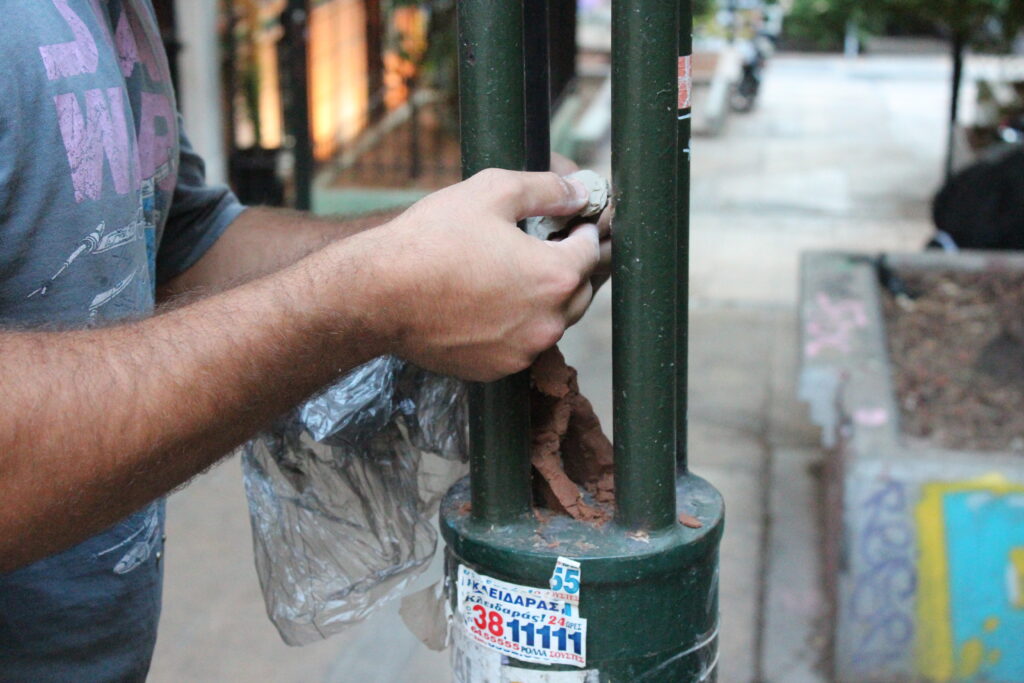
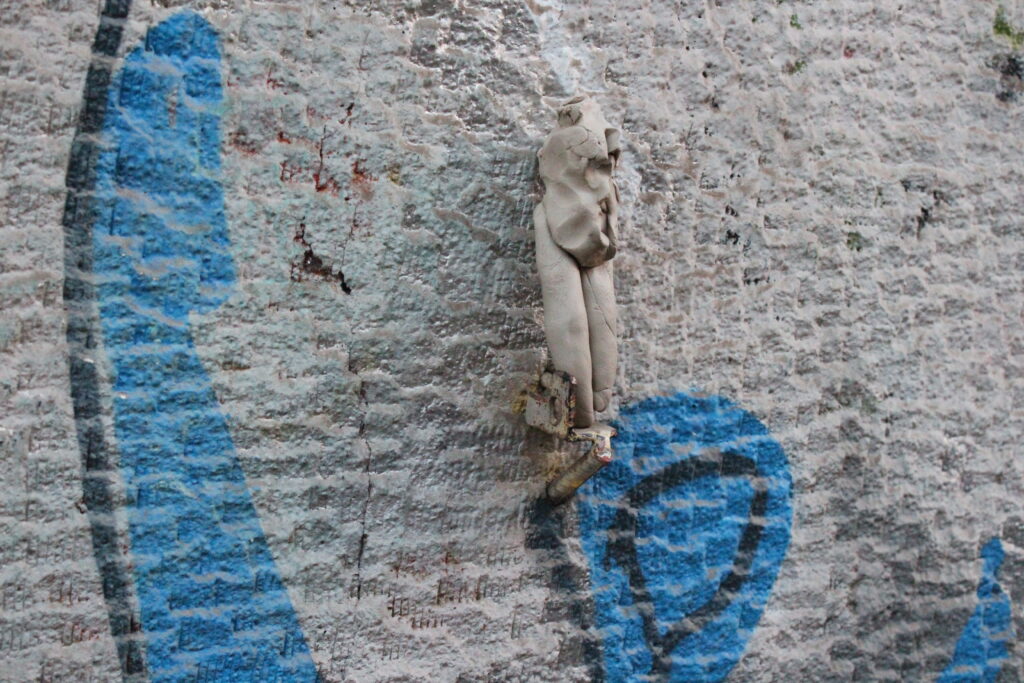
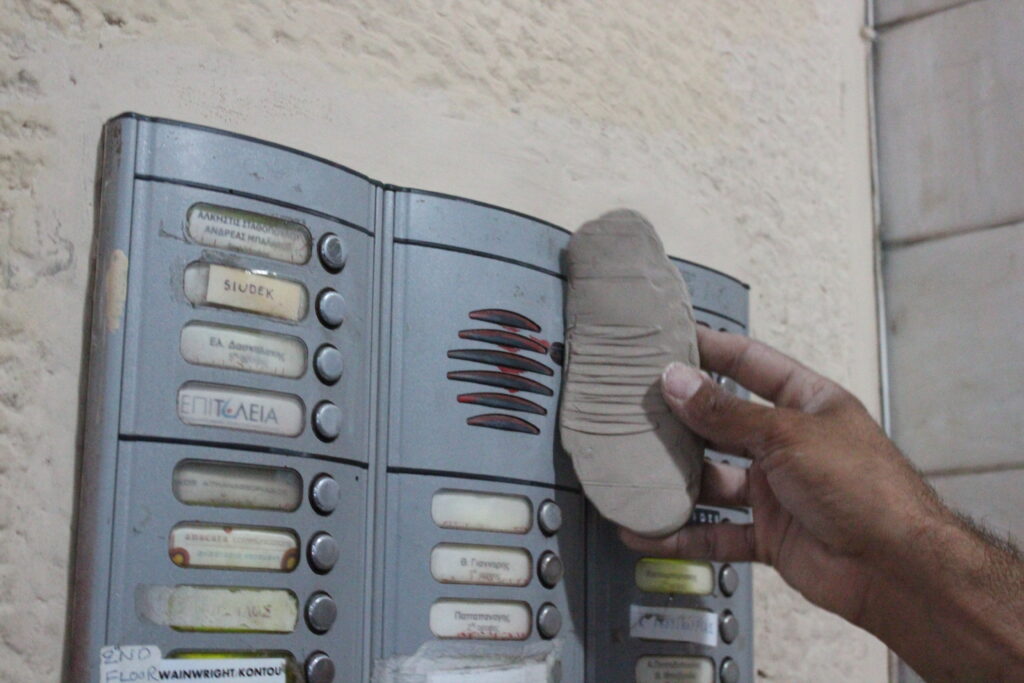
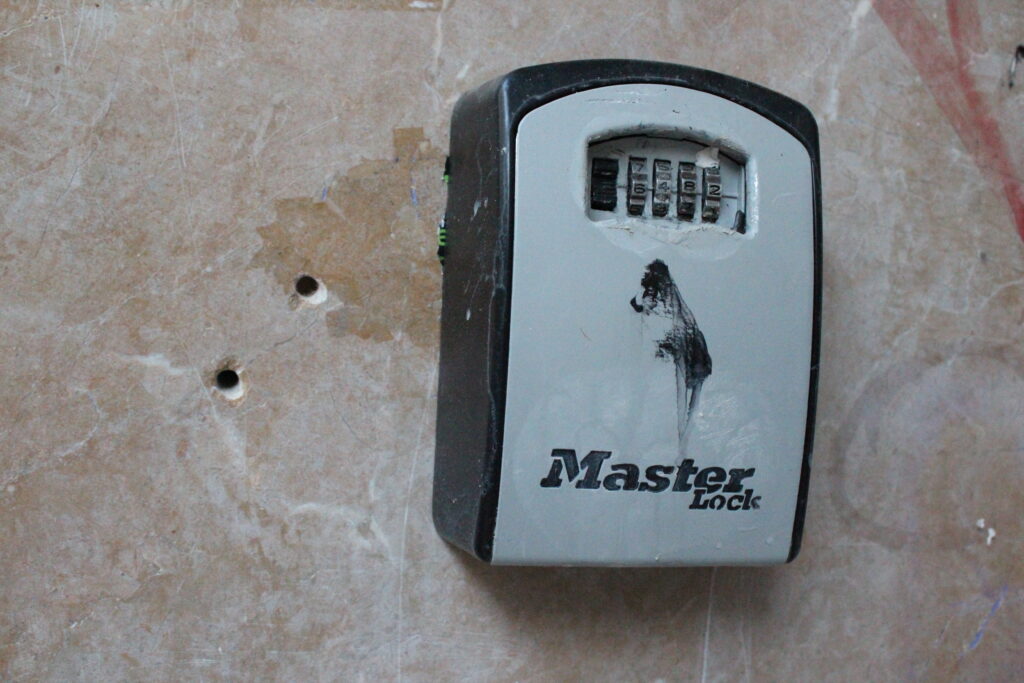
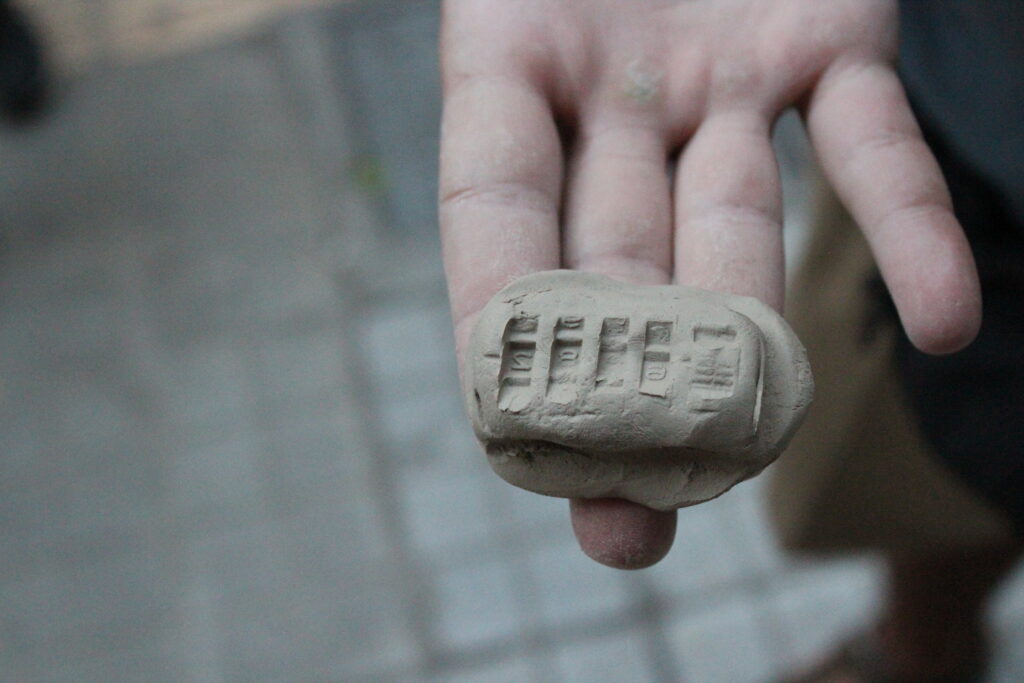
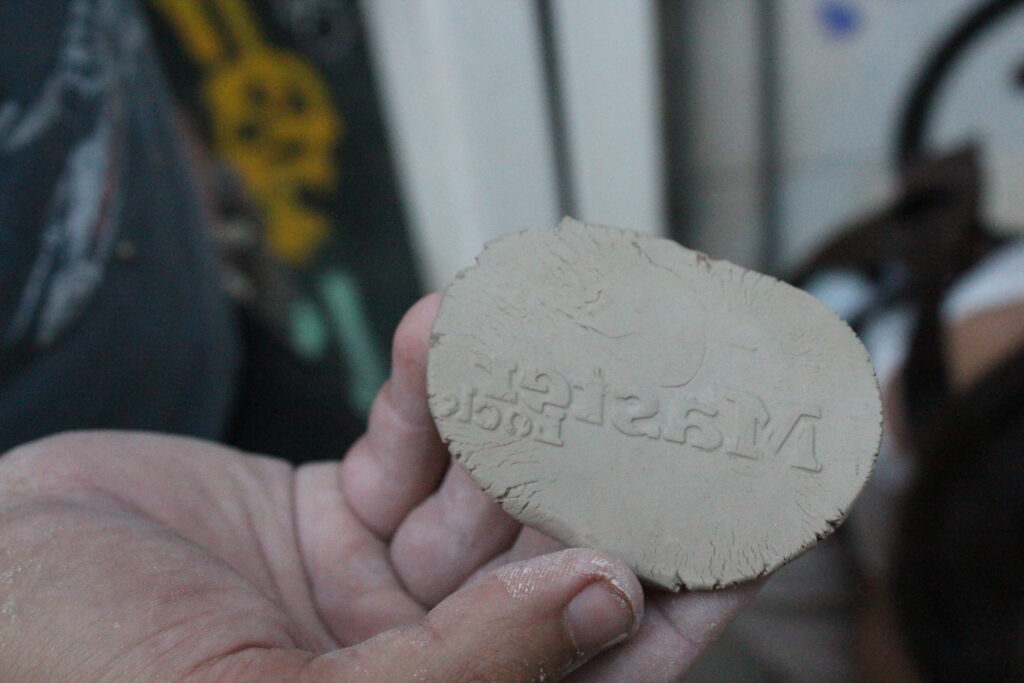
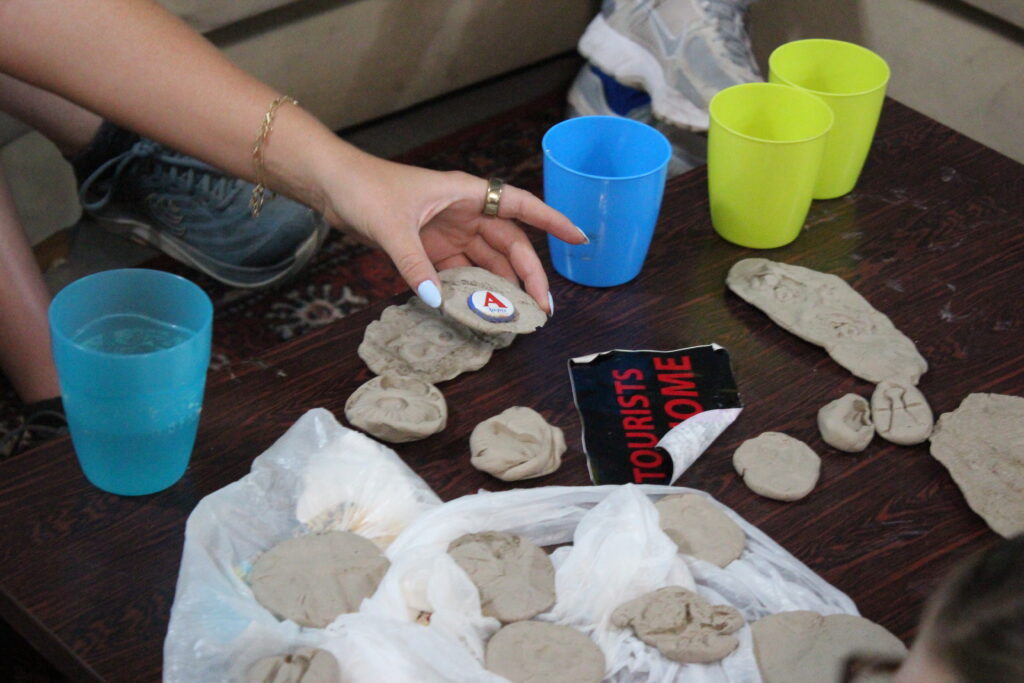
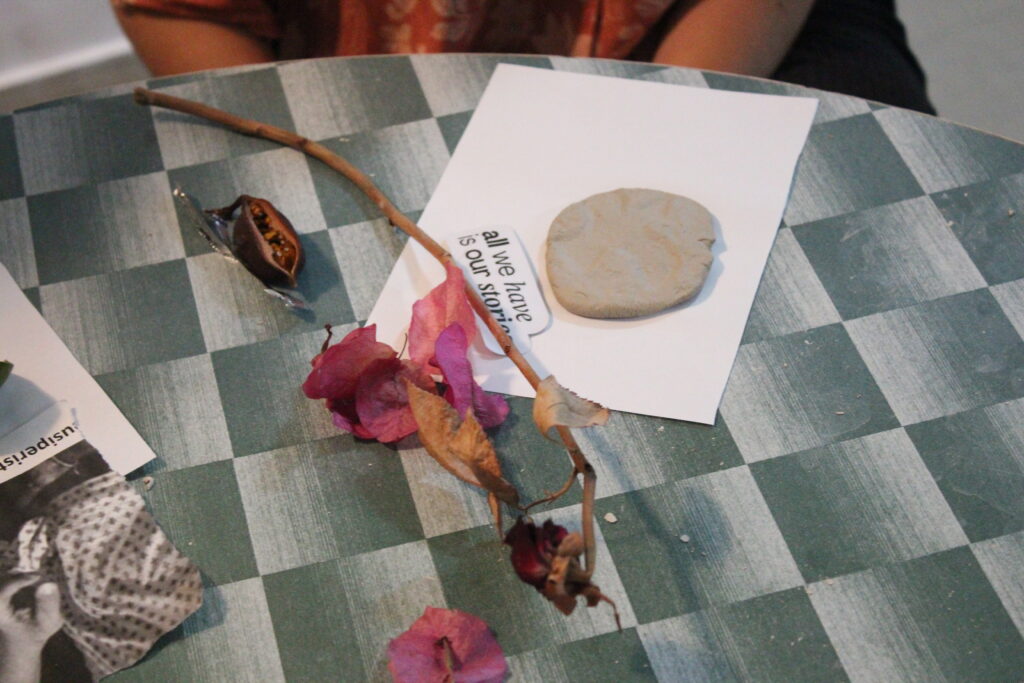
After the exploration, participants slowly gathered back to the community space and divided into groups that represent the four contradictions. They took turns sharing their findings and explaining how these relate to the contradiction they investigated. The results were varied and sparked numerous conversations about contextual struggles with gentrification, housing, policing, materiality, accessibility and history. Due to time limitations, most of the participants didn’t engage with the final “making” exercise. The initial intent was that they produce a collage, by inking and stamping their clay reliefs, writing about their experiences, sketching, drawing etc. However, just the group discussions were vibrant and engaging, allowing them to reflect collectively. In a short feedback session at the end, participants reported feeling that the workshop was a very fun way to get acquainted with the city, allowing them to focus on details of built space that they would otherwise not notice, and observe through a critical lens. One participant also suggested that a short semi-guided tour could provide context for them to utilize in their own subsequent exploration. Another participant suggested that instead of a tour, a map could give the necessary context and allow personal interpretations. These ideas are valuable for future iterations of the workshop; combining clay not only with exploration, but also acts of counter-mapping.

Reflection
Due to physical constraints, such clay-based exploration averts your gaze from things that are out-of-reach, too high-up; it forces one to focus on what can be physically grasped; the immediate public space, the floors and the walls. The participants’ collections of textures functioned as a “physical sketchbook”, allowing associations through material storytelling to emerge, which connect abstract ideas with tangible objects. An experiment in itself, the workshop exemplified how clay can be used as a tool to connect materiality with critical reflection, linking the hand with the brain. This could be a valuable tool for architectural documentation, particularly for students, when engaging with intangible concepts in public space.
Perhaps a key element here is the textural and chaotic nature of Athenian public space itself, which offers a myriad of visual and physical stimuli to the flaneur. It would be interesting to see how this workshop would function in Amsterdam, a place where public space is constantly renewed, more homogeneous and smooth.